Spring has come quickly around the corner, and Digital Commonwealth is blooming with new additions. Check out our previous blog posts for information on our new collections, plus other insights into photography and digital preservation at BPL.
One of our staff photographers, Jade Alderman, has some insight into the process of photographing two books from BPL’s Research Collection. Read on for behind-the-scenes details on capturing this set of brittle materials and some of the complex challenges that she faced along the way.
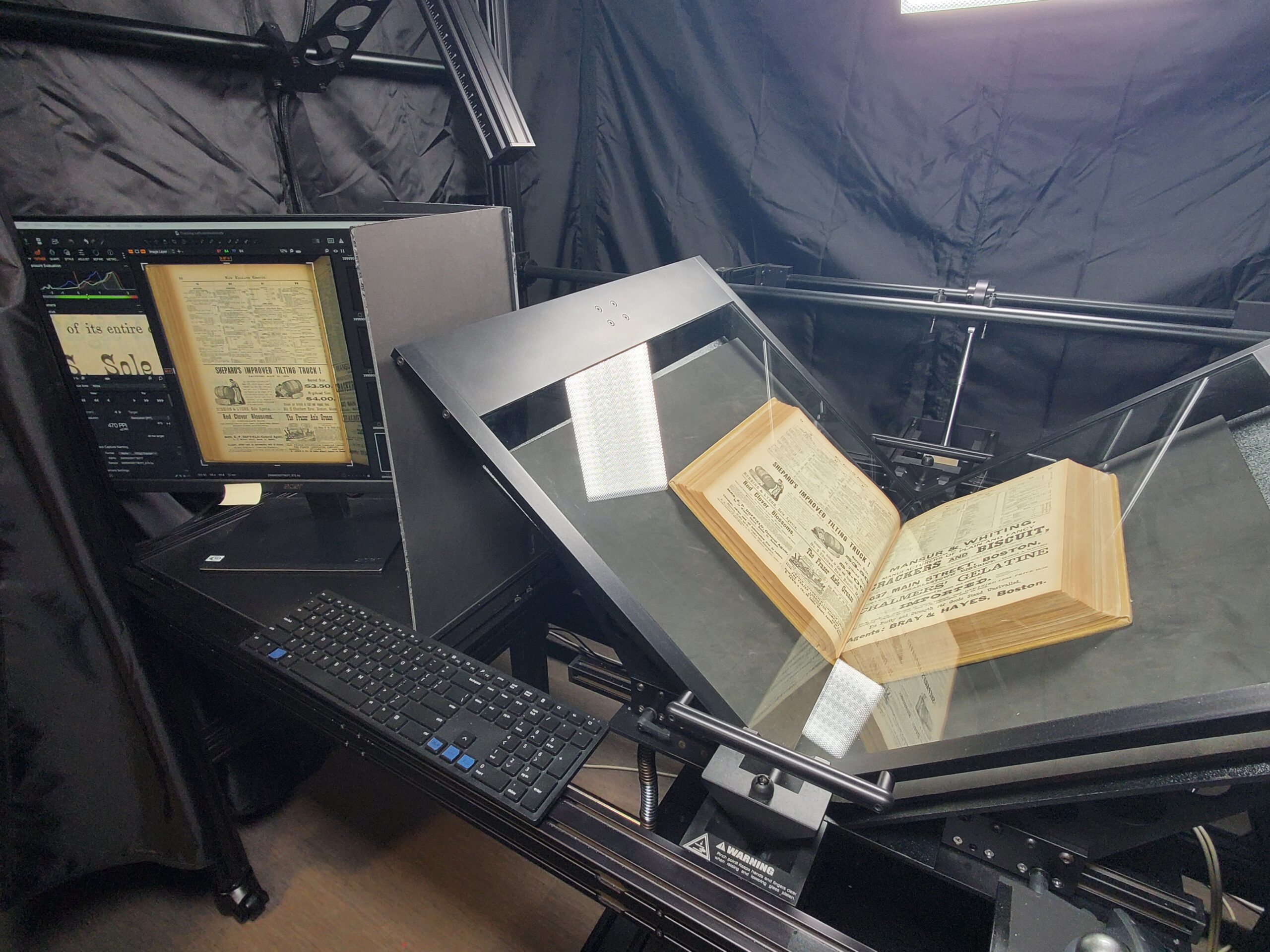
Recently, Digital & Online Services received an inquiry from BPL’s Research Collection to photograph bound collections of the New England Grocer from 1883-1884 (v.14 and v.15). Each volume compiles multiple newspaper issues of this Boston-based grocery periodical advertising local businesses’ goods, promotions, and services. These materials are rare and had not been available digitally prior to the request. I want to highlight these unique additions and share the troubleshooting needed to photograph volumes with brittle, aging pages. On top of everything else, these turned out to be the longest books I have photographed so far, with one totaling in at 1162 pages and the other at 1244!
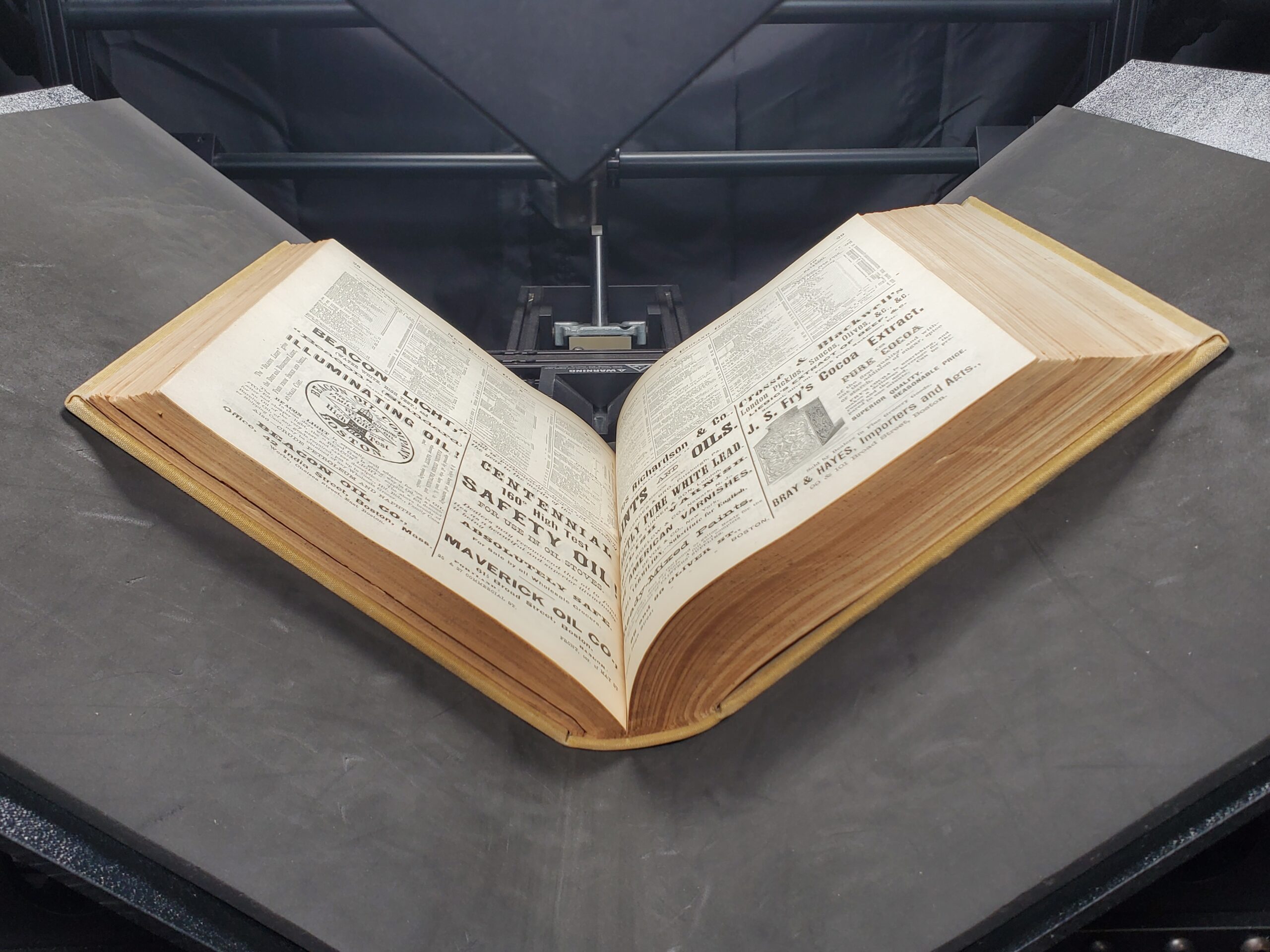
One of the main challenges in working with these volumes was handling them safely. The BC100 workstation helps to mitigate damage to objects by using a pneumatically controlled V-shaped glass that rests on the book within the cradle, without placing the full weight of the glass on the item. Also, the opening angle of the book is limited to 100 degrees.
An additional method I took to minimize damage was used on the New England Grocer v.15, which has a particularly fragile spine block that is beginning to detach. To help protect it, I placed a cut sheet of black paper underneath the book (small enough that it would not be visible in the photograph), so that the book and paper could be moved together. This ensured that any repositioning in the cradle wouldn’t introduce additional friction or cause further damage to the spine.
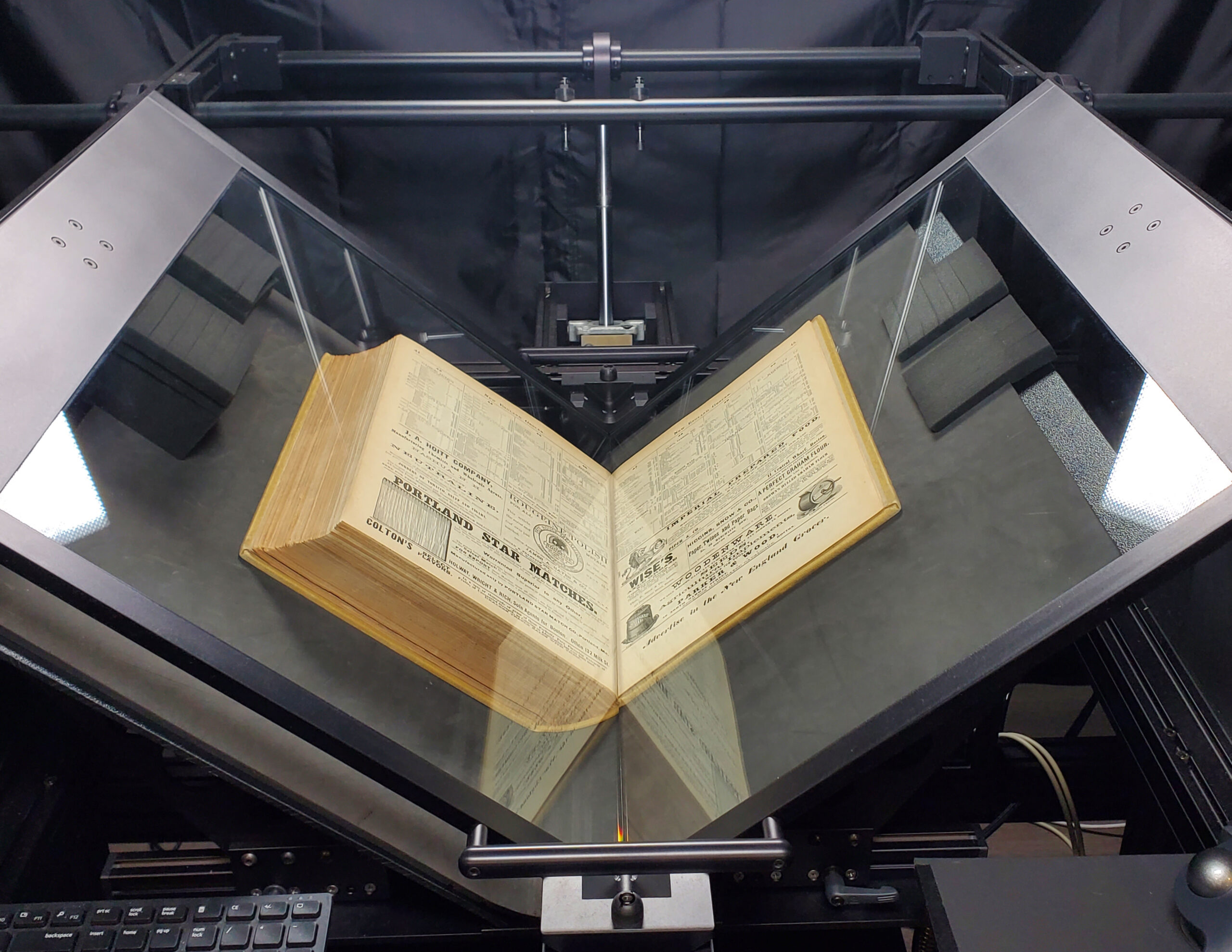
Another precaution was to place lightweight foam blocks next to the book in the cradle (see above), at a height slightly higher than the text block. This setup helped reduce the amount of weight that the glass rests on the volume while still applying enough pressure to capture a quality image. These foam blocks were gray so that they would not introduce any color cast and were positioned far enough away to avoid casting shadows. I used this approach whenever a section felt particularly fragile or when pages appeared likely to flake.
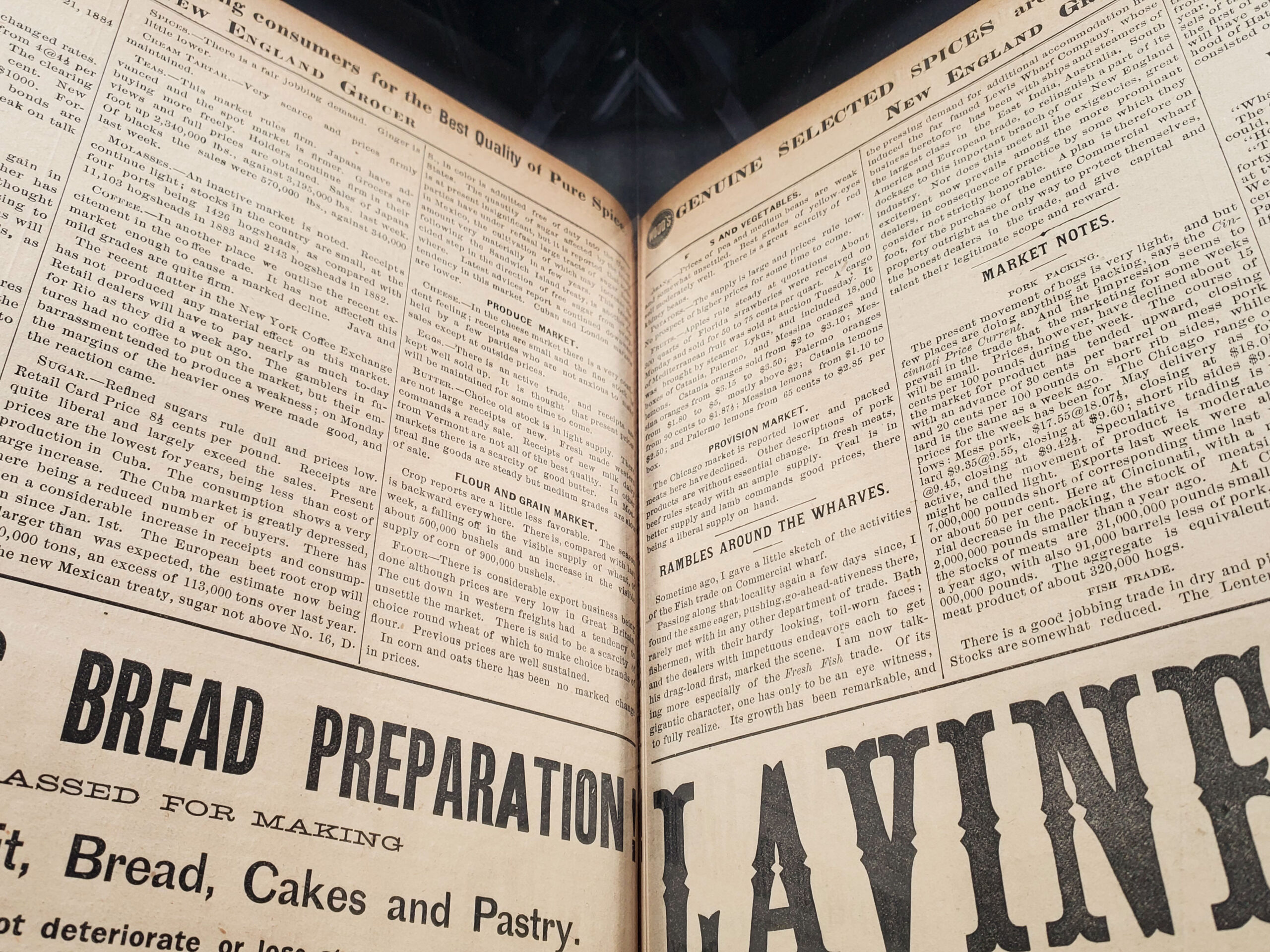
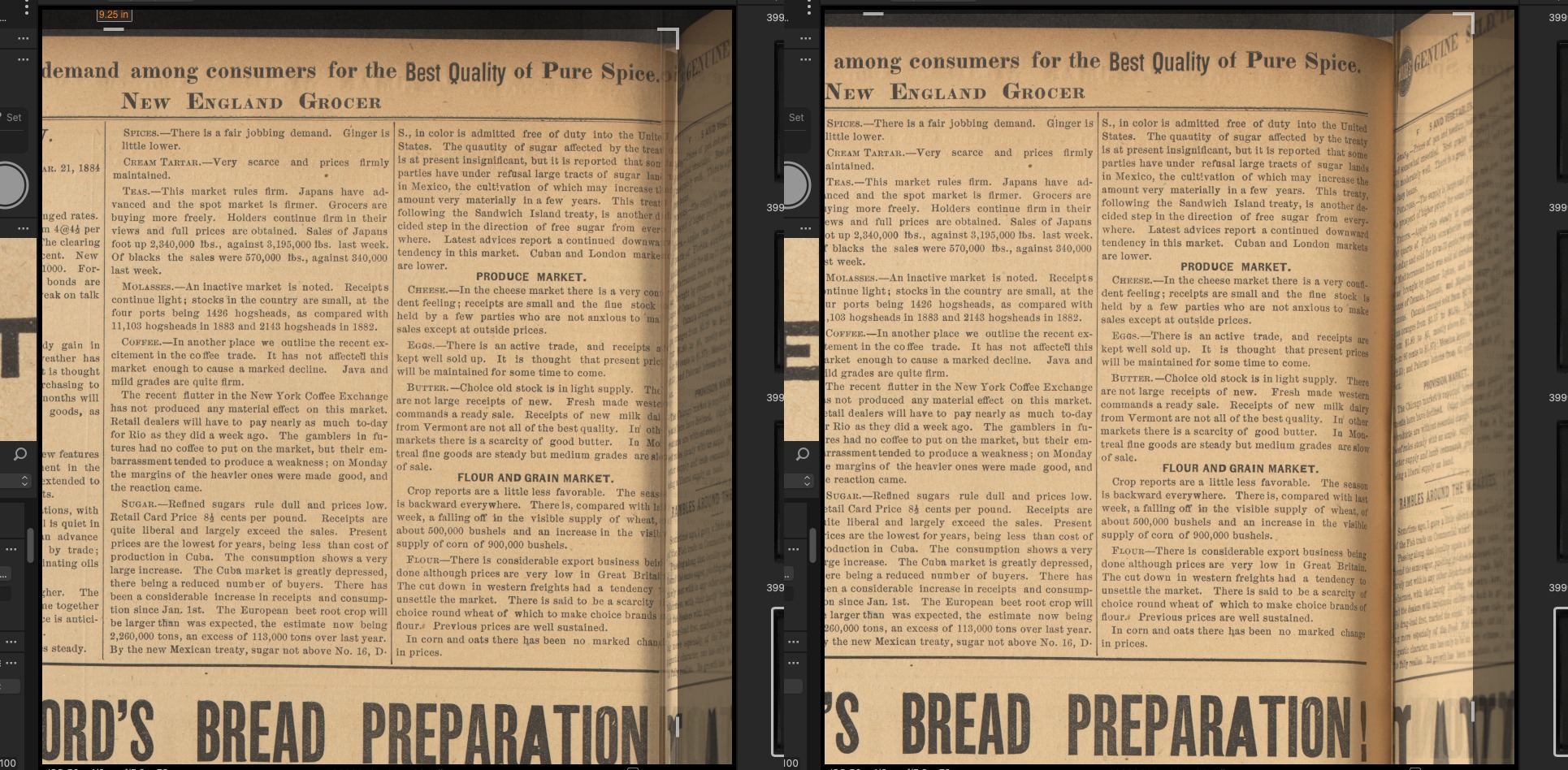
Another obstacle was that some of the text ran very close to the gutter. Given the size of these volumes, the opening angle in the cradle was more limited. Because of this, I had to reposition the book in the cradle and photograph a few of the pages on one side at a time. This setup can be seen in the Capture One screenshots below, where the image on the left shows the book positioned normally, while the image on the right shows the book shifted to the left, allowing the glass to sit farther to the right.
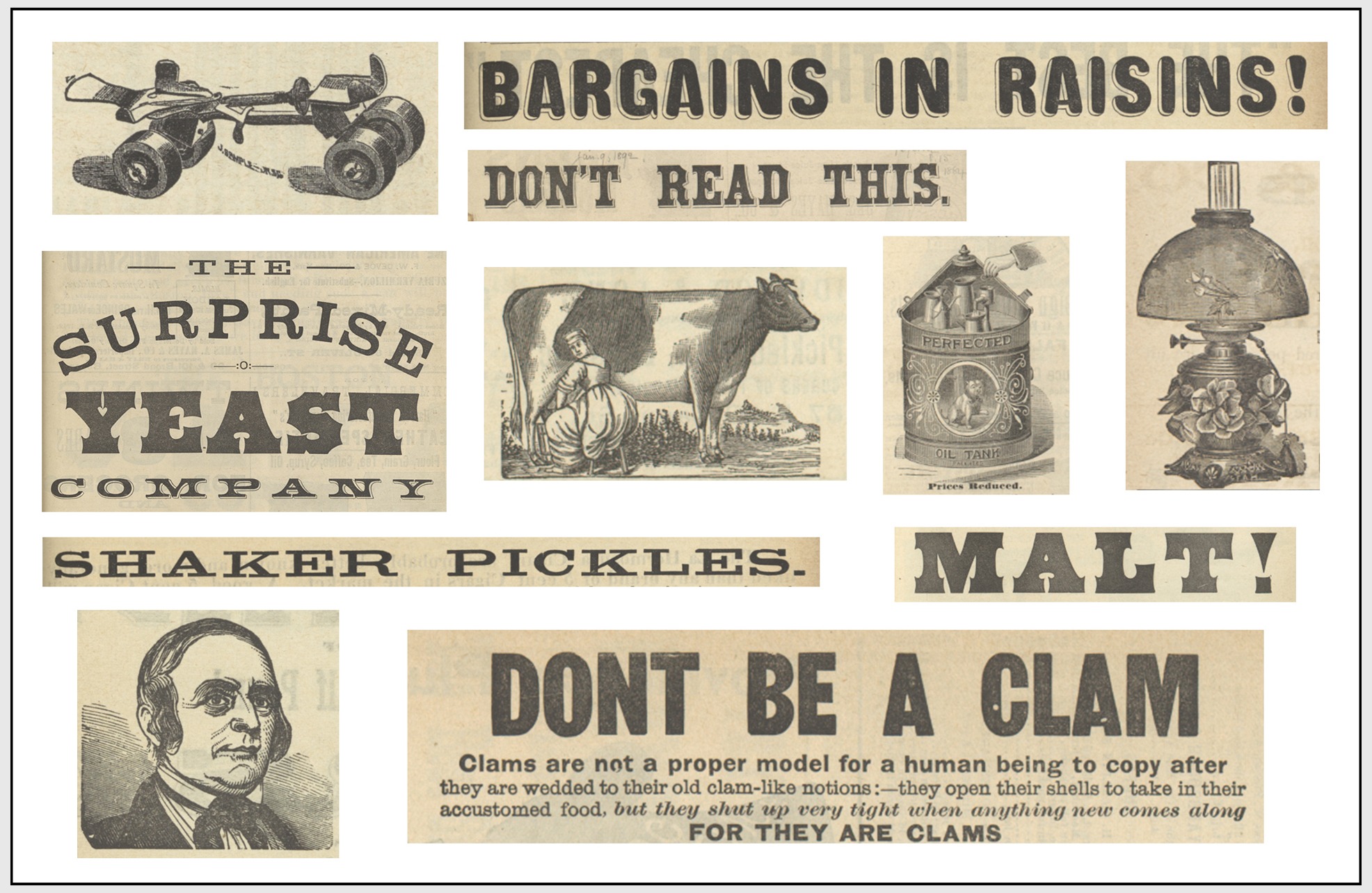
Overall, it was a rewarding experience to work on photographing these rare collections from the New England Grocer series, while strategizing best practices for photographing these fragile materials. Below are some memorable snippets I caught while photographing — I think “Don’t Be a Clam” is my true favorite of the bunch!