
Happy holiday season to all our readers and partner institutions!
We’re excited to share another post from one of our staff photographers, Jade Alderman. Jade joined us just this summer, and she has had the chance to photograph many different bound materials while mainly working under our BC100 camera setup. Last month, some digitized items from BPL’s Rare Books and Manuscripts department were shared on DigitalCommonwealth.org. Jade was a key part of this project and imaged many of the books from this selection (linked below), and she is here to share some behind-the-scenes insight of how the process went.
———————————————————
I had the pleasure of working with my first set of items from the Rare Books and Manuscripts Department at the library this fall. This round of materials included works varying in age, fragility, size, language, reading orientation, and more!
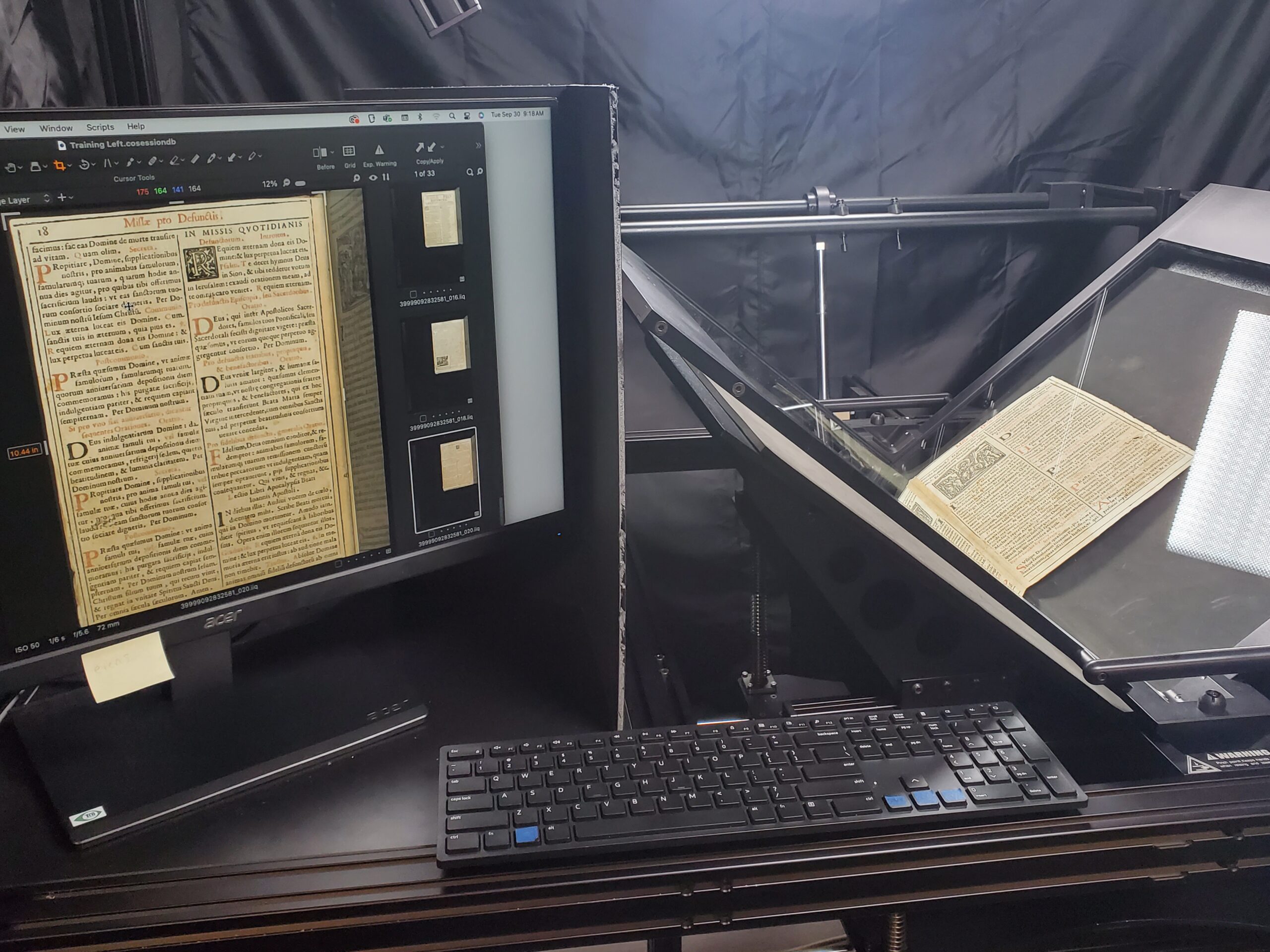
The BC100 camera workstation is calibrated to mitigate damage to items. However, while working with objects from this collection, I had to be cautious to ensure damage was prevented due to their fragility and age. I enjoyed working with these various books, including two Catholic “Masses for the Dead.” One item was from 1669 (seen above), while the the other dates to 1706. For these two items, it was intriguing to compare the differences in quality and printing while digitizing them.
Another gem that was very interesting to work on was a Hebrew prayer book from the 19th century (seen in the below two photographs).
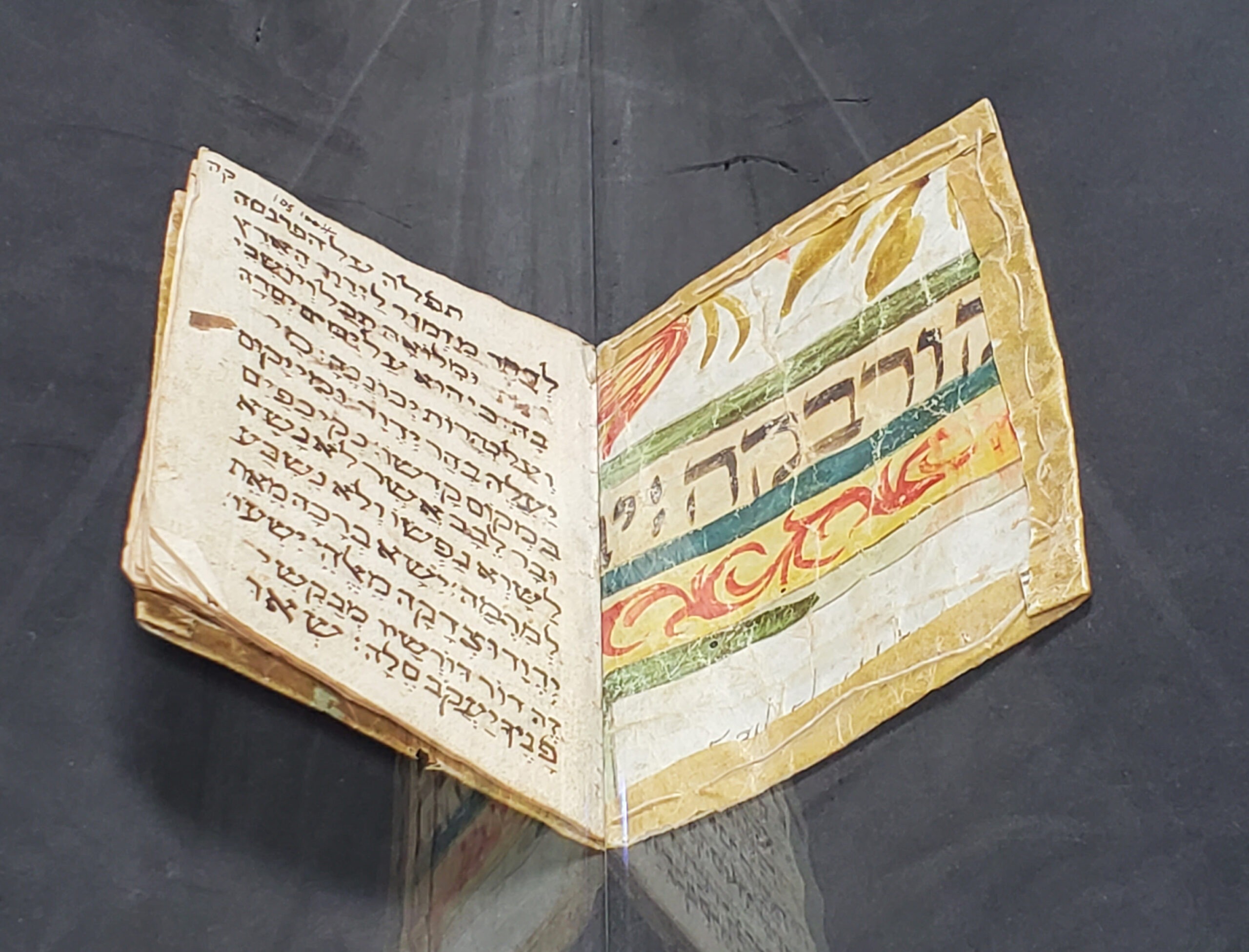
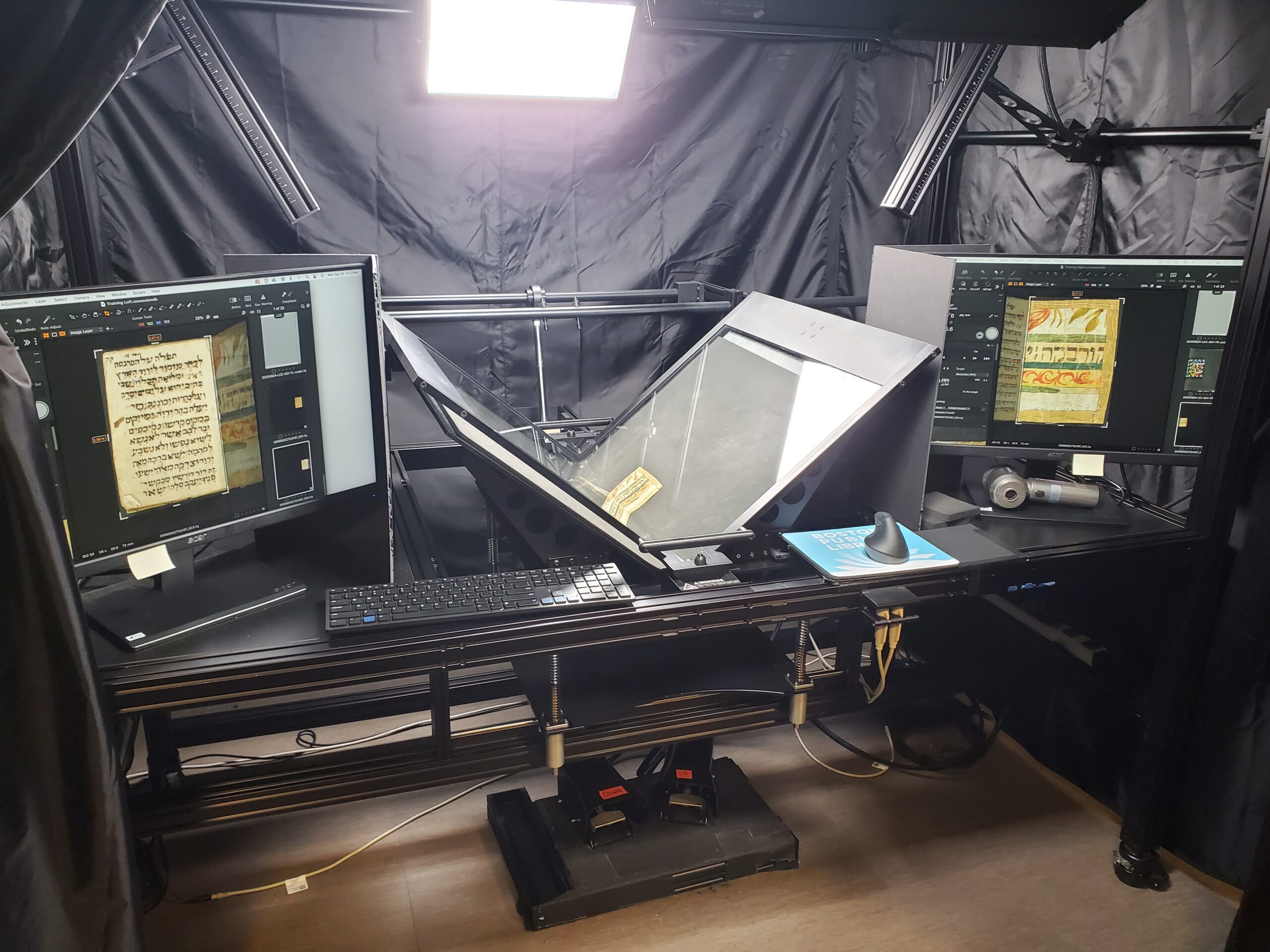
This item was particularly small, along with the feature of being read right to left. Therefore, my typical numbering structure in the dual camera system (where evens are photographed on the left and odds are photographed on the right) was flipped around.
In this selection of materials, there was an additional piece which had the reading orientation of right to left text. This book, a Chinese translated version of “Our Bodies, Ourselves,” was the most contemporary object that I photographed in this assortment, as it was from 1975. Because this was a very uniformly printed and bound item, it was interesting to juxtapose it against the Hebrew prayer book. The prayer book had uneven page sizing and differing binding tightness throughout the material. These challenges led to more careful adjustment while photographing, to ensure the prayer book was as uniform as possible in the photos. In comparison, the imaging of the adaptation of “Our Bodies, Ourselves” was quicker to setup, in part because it was not markedly delicate.
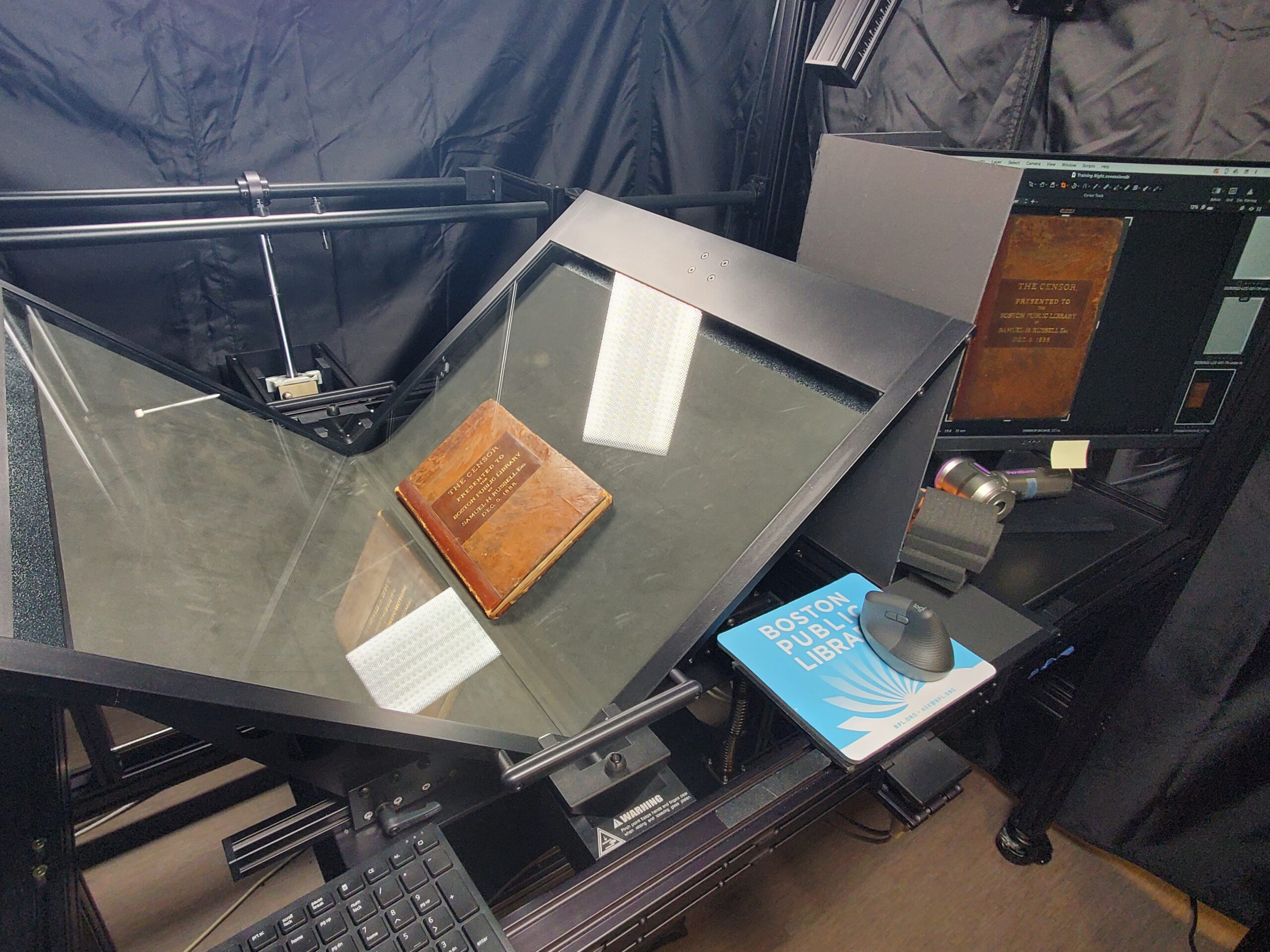
“The Censor” was an intriguing volume to photograph (see above). While this item was one bound book, it contained 30 different newspaper issues inside, that are treated as separate digital objects. Therefore, the compilation was photographed at once, and then the files were separated into their respective segments.
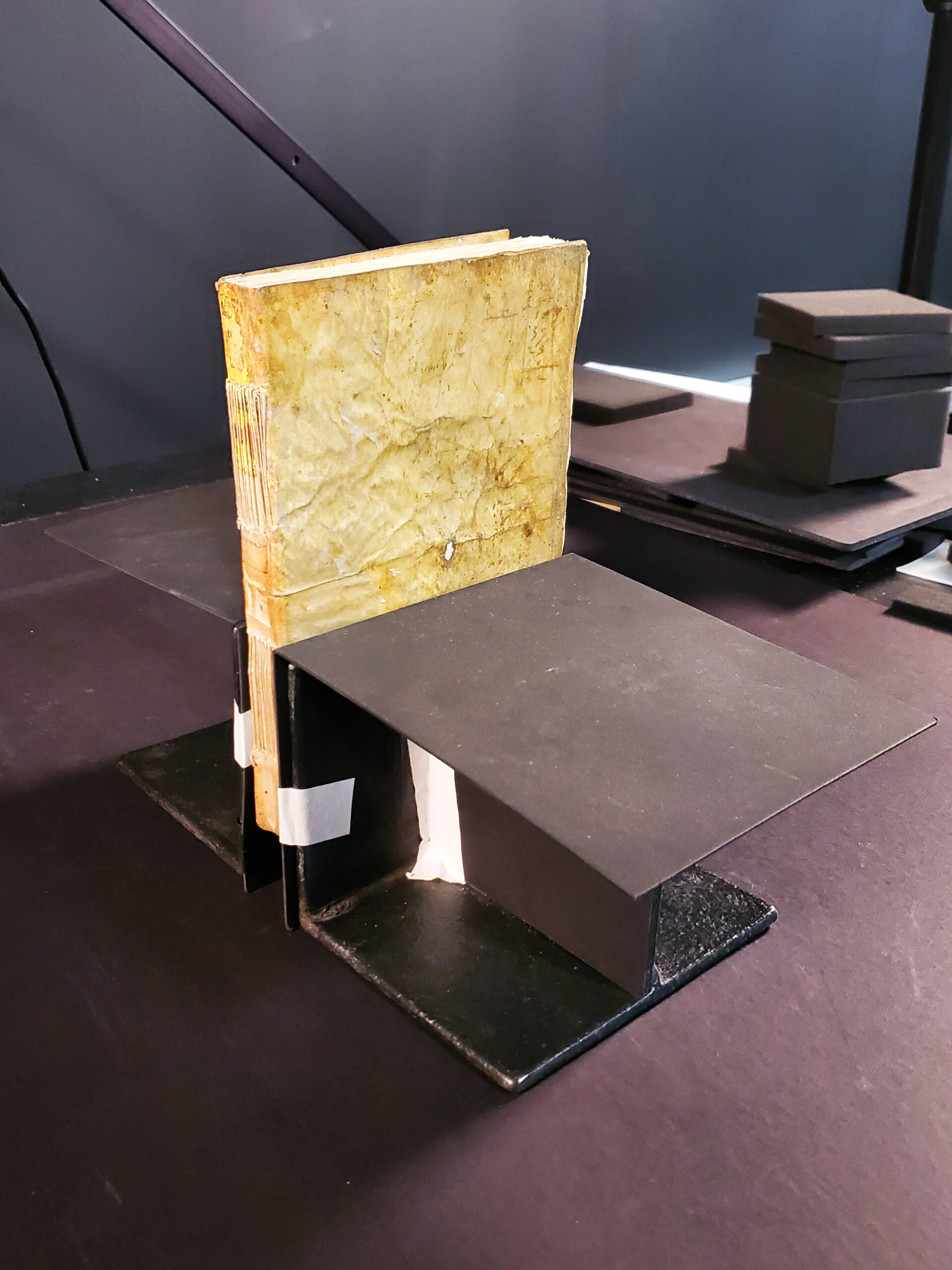
Many of the bound works here also required imaging of the spines and edges. However, this is not something that is able to be completed on the BC100 setup. Therefore, I transitioned to our DT Titan down shooting setup. By sandwiching the item between two book ends (see below), I was able to photograph the spines and edges of the book using an overhead camera.
It was a delight to work on these materials from BPL’s Special Collections department, and I look forward to seeing many more items from this collection come through the digital lab.